The Methodology
How We
Train.
Every program at LOVEHER runs on the same set of principles. Not because it's a formula — because these principles are the only things that actually work for the bodies of women 25–65+.
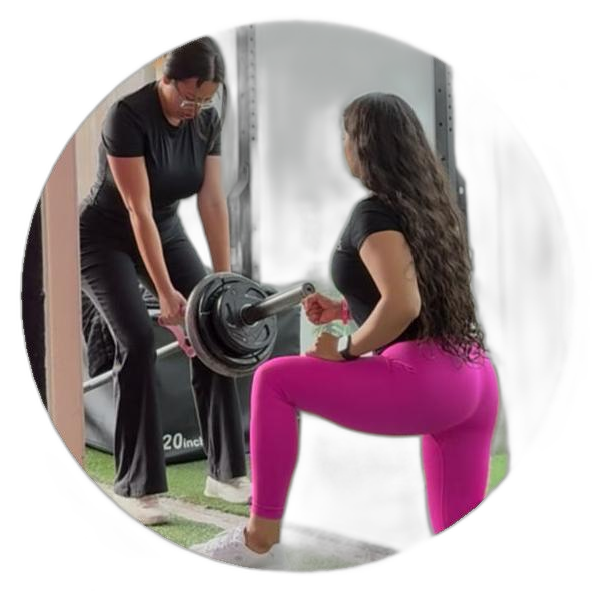
Every program at LOVEHER runs on the same set of principles. Not because it's a formula — because these principles are the only things that actually work for the bodies of women 25–65+.
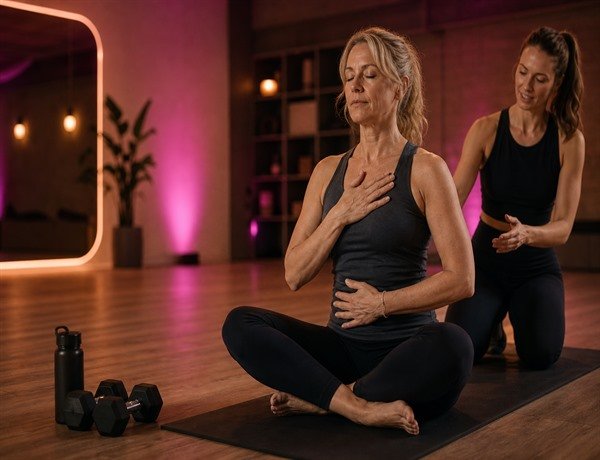
High-intensity is not the answer for most women. The nervous system — already operating under chronic stress, sleep disruption, and hormonal change — doesn't need more stimulation. It needs regulation.
Every LOVEHER session starts with the question: what does this woman's nervous system need today? The answer shapes the session. This is why the training is slow, connected, and grounded — and why it works when everything else hasn't.
Your body is not the same body it was 10 years ago. Perimenopause, menopause, chronic stress, sleep disruption — all of these change what your body needs, how it responds, and what it can do.
Dee programs around what your hormones are actually doing. That means different rep ranges, different recovery windows, different nutrition strategies — based on where you are in your cycle and your life stage, not a generic template.
The standard LOVEHER semi-private program runs on a 4-day split. Every day has a specific purpose — and a specific reason it's structured the way it is.
Compound movements — squat, hinge, lunge patterns. Progressive overload within what your nervous system can handle. Hormonal adjustments applied.
Push/pull balance. Core stability — not crunches. Breathing patterns that directly address nervous system regulation. Foundation work.
Moderate-intensity combination day. Cardiovascular work tuned to your heart rate — not a class pace. Recovery-integrated.
Mobility, stretch, light movement. This day is not optional. Recovery is where the adaptation happens. This is part of the program.
LOVEHER floors are tuned for hypertrophy the women's-health way: small ratios, clear intent every set, and coaching that cues breath and presence instead of turning up the volume.
Most women are told to push harder when results stall. LOVEHER does the opposite — because the science of women's physiology says the missing piece is almost never more effort. It's almost always less cortisol.
Chronic stress keeps cortisol elevated — and elevated cortisol tells your body to hold fat (especially belly fat), break down muscle tissue, and suppress the hormones that drive recovery. More training under chronic stress doesn't fix this. It makes it worse. LOVEHER programs are designed to lower the cortisol load, not add to it.
Poor sleep raises cortisol. Raised cortisol disrupts estrogen and progesterone. Disrupted hormones reduce training response — no matter how hard you worked. This is why LOVEHER weekly check-ins log sleep quality as a primary data point. When sleep is off, the program adjusts before your next session, not after the next 6 weeks fail.
Stress spikes blood sugar — independent of what you eat. LOVEHER coaches women to understand how stress, meal timing, and training sequence directly impact energy levels, cravings, and fat storage — so your meals and sessions work with your physiology instead of against it. This is nutrition coaching grounded in physiology, not willpower.
"This is why LOVEHER programs include stress management coaching alongside every training block — not as a bonus, but as the foundation."
— Coach Dee
The scale is not a coaching tool. These are.
Fat mass vs muscle mass vs body water. The numbers that tell the real story. Measured at baseline and every 6 weeks.
Education on how food timing, stress, and sleep interact with energy and cravings — without gimmicks. Nutrition coaching stays practical and livable.
A named, structured nutrition protocol for the inflammatory patterns common in women 35+. Built by Coach Sarah. Not a generic meal plan.
Every client logs sleep, stress, nutrition, and session quality. Dee reviews and adjusts. This is what real accountability looks like.
Short clips from coached sessions — see how we cue squat patterns, Smith work, and upper-body pressing with intention.
How we layer intent before load — the LOVEHER approach to every session.
Lower-body strength day staples — depth, breath, and control first.
Chest tall, heels rooted — a favorite primer for hip and core integration.
Front-loaded patterns on the Smith — knee tracking and torso angle in view.
Pro tips for a strong, sustainable pull — width, wedge, and lockout.
Upper pressing with a stable track — shoulders packed, path controlled.
Smith shoulder press — stacking the joint without losing rib position.
Single-leg strength with a stable aid — height, knee path, and tempo.
The methodology only makes sense when you experience it. Start with the 6-Week Challenge or book a consultation to find the right fit.